Australian construction businesses will recognise the pressure described in this New Zealand case study. Fitzgerald Construction is exploring how AI could help its team review tender information faster, reuse the knowledge it already has and make better decisions about which work to pursue.
Watch the conversation
Watch the conversation on YouTube
The short version
Fitzgerald Construction responds to around 80% of its work through tenders. When several arrive in a short period, two dedicated quantity surveyors need to process large volumes of plans, specifications, contracts, subcontractor quotes and company information under intense time pressure. The proposed AI data intelligence platform would help the team find and reuse its own information, identify risks earlier, review pricing and learn from tenders it did not win. Although the project is based in New Zealand, the underlying challenge is relevant to Australian construction businesses managing large tender packs, uneven workloads and limited estimating capacity.
About Fitzgerald Construction
Fitzgerald Construction is a New Zealand construction company with around 30 years of experience. Headquartered in Nelson, with an office in Christchurch, the business works across commercial construction, residential work, maintenance, modular buildings and government projects.
Its work includes education projects, Ministry of Justice and local council work, retirement village maintenance, New Zealand Police buildings and modular classrooms delivered around the country. The business has about 65 core staff and has previously scaled to approximately 110 people to meet project demand.
Why this matters to Australian construction businesses
Fitzgerald’s project is specific to its New Zealand systems, tender process and commercial history. The transferable lesson is broader: start with a part of the tender process that creates pressure, connect the information the team already relies on and measure whether the new approach improves capacity, response quality or commercial decision-making.
An Australian construction business would need to apply the same method to its own procurement requirements, estimating process, project records, pricing information and approval workflow. The technology should support the people making the tender decision, not replace their judgement.
What’s covered
Five things worth taking away
The constraint is not only delivery capacity. It is the ability to respond well to opportunities.
Large tender packs make early document review, qualification checks and risk identification time-consuming.
The best source of new tender content may be information the business has already created.
Reviews of unsuccessful tenders can become useful input for pricing, subcontractor selection and future responses.
The intended business result is more work at a commercially sensible margin, not simply more AI activity.
Fitzgerald Construction wins most of its work through tendering. Around 80% of the business’s work comes through that process, with opportunities arriving through New Zealand’s Government Electronic Tenders Service.
The flow is uneven. There may be one tender in a week, or five tenders arriving within a few days, followed by several weeks with little or no tender activity. The team needs to respond when the work appears, even though it is not practical to maintain a large tender-response team for the quieter periods.

Two quantity surveyors manage the tender process, with project managers and other specialists joining when their knowledge is needed. When demand spikes, the team can become overloaded. Fitzgerald has previously outsourced parts of the work, but external tender writers have not produced a winning tender for the business.
“If you’re swamped by tenders, you’re going to rush through those just to get them out the door.”
That pressure creates more than a resourcing issue. Rushed responses can affect quality, increase the risk of missing a requirement and leave less time to review whether the pricing is commercially sound.
A tender may include a large set of plans, specifications, a draft contract, pricing information and requirements about the response itself. For a complicated building project, Fitzgerald may need to work through 100 pages of plans and 600 pages of specifications.
Small details can matter. The team needs to understand whether it qualifies, identify contract terms that may create risk, work out which subcontractors need to provide quotes and find information that may affect the price or delivery plan.

Once that initial review is complete, the team must gather subcontractor pricing, measure the work, enter figures into pricing software and prepare the non-price parts of the response. At the end, someone still needs to review the completed tender for omissions, double-ups and anomalies.
When the team is working across several responses at once, the final review can be squeezed. That is where the proposed project begins: by helping the people responsible for the tender find important information sooner and spend more time on the parts that need their judgement.
Fitzgerald is already using ChatGPT in parts of the business. The AI Investment Fund project would build on that experience by bringing the company’s own information into a more useful data intelligence platform.
The idea is not to ask a general-purpose tool to write a tender without context. It is to give the team a way to work with information that already exists across previous tenders, project records, staff CVs, pricing history and review outcomes.
At the start of a tender, the team could ask questions such as:
Those answers would help the team get the tender moving while they continue with other work. They could send information to subcontractors earlier, then return to the tender with more of the required context already assembled.

Many parts of a tender response are repeated. Staff CVs need to be kept current. Project experience needs to be matched to the opportunity. Descriptions of capabilities may need to be adapted to suit a particular client or type of work.
Today, that can mean finding an old response, copying sections and manually checking what has changed. The information may exist, but it is not always easy to locate or interpret in the right context.
A useful system would understand more than the words in a document. It would need to understand why one project is relevant to one tender, which CV belongs with which type of work and how a previous response was assessed.

That is the difference between putting files in one place and making company knowledge usable. The objective is to help the team reuse its own work without treating every tender as a completely new manual exercise.
One of the most useful opportunities discussed in the interview is the review of unsuccessful tenders.
Fitzgerald sometimes receives detailed feedback about where its response was too expensive, which non-price sections were not strong enough or how its pricing compared with the successful bid. That feedback can include small percentage differences in areas such as carpentry, mechanical work or preliminary and general costs.
At present, that knowledge may remain with the people who worked on the tender or be difficult to apply to the next similar opportunity. A data intelligence platform could make it easier to connect the feedback from a previous tender to a new one.
For example, if a new tender is similar to one the business previously lost because its mechanical pricing was high, the team could be prompted to review that area. It could then investigate whether a different subcontractor, a different scope interpretation or a different commercial approach is warranted.
“Having all that information together” would make it easier to see where a previous tender was not competitive and what should be reviewed next time.
This does not mean the system decides whether Fitzgerald should bid. It gives the people making that decision better access to the company’s own history.

For Fitzgerald, success is not defined by how many tender documents an AI system can summarise. The intended outcome is more work for the business, supported by better-quality responses and sounder commercial decisions.
There are several measures the project could track:
These measures still need to be established and tested. The project is an investment in a better way of working, not a claim that the results have already been achieved.
Saving time matters because it creates capacity. But the business value depends on where that capacity goes.
If Fitzgerald can prepare responses faster, it may be able to consider more opportunities, put more care into the responses it chooses to submit and reduce its need to outsource tender work. If better review leads to more competitive pricing, the business may win work it would otherwise have missed.
There is also a margin question. Winning a tender is not enough if the price does not reflect the work required or if important risks were missed. The right system should help the team identify those issues earlier, before the response is submitted.
The commercial goal is therefore a useful one: shift the constraint from responding to tenders towards delivering the work that Fitzgerald wins. That would mean the business has enough opportunities to consider, and its next question is how to resource and deliver them well.
Fitzgerald’s project points to several practical areas where AI may support construction businesses in New Zealand and Australia:
The common thread is that each use case starts with work Fitzgerald already does. AI is being considered because the process is repetitive, time-sensitive or difficult to review under pressure.
The proposed system will only be useful if it can access the right information and understand how that information relates to the work.
Fitzgerald already has a project management platform, pricing software and information in previous tenders. It also has practical knowledge held by quantity surveyors, project managers and other staff. Bringing those sources together raises important questions:
The platform should support human decisions, not replace the professional knowledge required to assess a tender. A quantity surveyor still needs to decide whether the scope has been understood, whether the price is appropriate and whether the business should submit.
The lesson is not that every Australian construction company needs the same platform. It is that an AI project becomes easier to assess when it is connected to a real business constraint.
Fitzgerald has identified a process that is important to revenue, difficult to resource evenly and full of information that is already being created. It can describe where pressure appears, what work is repeated and what a better result would look like.
That gives the project a clear set of questions to test:
For an Australian business, the same questions can be applied to its own tender process, systems, data and approval requirements. They are more useful than asking whether the business is using enough AI because they connect the technology to the commercial outcome the business actually wants.
Before investing in AI
A practical AI project should connect the technology to a business process that can be observed before and after implementation.
A practical model for AI value

Ready to take the next step?
If your business is exploring AI but does not have an internal technology team, CORE brings managed IT support, cybersecurity, data governance, AI adoption and automation together under one accountable service.
About the project
This is a New Zealand case study. Fitzgerald Construction was selected through the First Focus New Zealand AI Investment Fund to develop and test its tender-response data intelligence project.
First Focus has previously run the AI Investment Fund in Australia. The transferable lesson is the method: start with a commercial constraint, connect relevant business information, keep professional review in the workflow and measure what changes.
The project is being developed, so the expected improvements in response time, quality, win rate and margin remain outcomes to test. The next step is to compare the current process with what changes once the new approach is in use.
About the guest
General Manager and Quantity Surveyor, Fitzgerald Construction
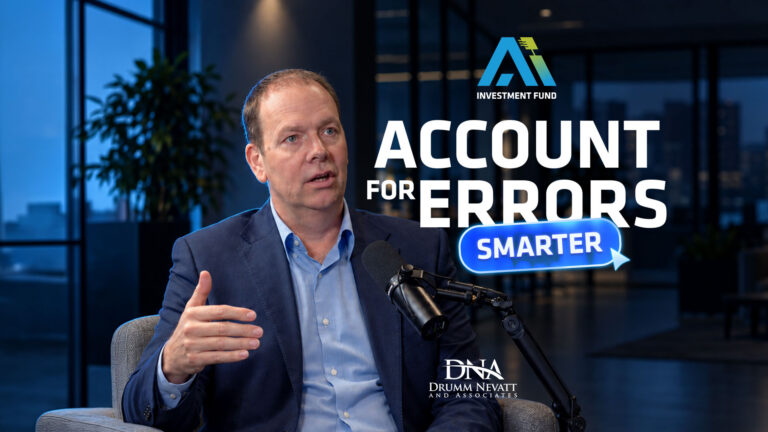
Charlie discusses how Fitzgerald manages tender opportunities, where the current process creates pressure and how the business hopes to use its own information to improve response quality, capacity and commercial decision-making.
Common Questions

 IT Strategy
 IT Consulting
 Data Services
 IT Infrastructure Projects
 IT Procurement
 Business Continuity Planning
 Virtual CIO
 Cloud Migration Services
 Managed IT Services
 IT Support Services
 Managed Cloud Services
 Managed SharePoint Services
 Unified Communications
 Connectivity
 Offshore Staff Outsourcing (BPO)
 Managed Security Services
 ACSC Essential 8
 Cybersecurity Risk Assessment
 Cloud Backup and Disaster Recovery
 Cyber Security Connect and Protect Program
 Automation
 Power BI
 Careers
 Awards and Certifications
 Management Team
 Case Studies
 Sell Your IT Business
 Our Commitment to the Environment
 CSAT Charity Donations
 Media Kit
 Sydney