Follow us on our channels:


Cybersecurity has shifted from being an “IT problem” to a boardroom-level business risk.
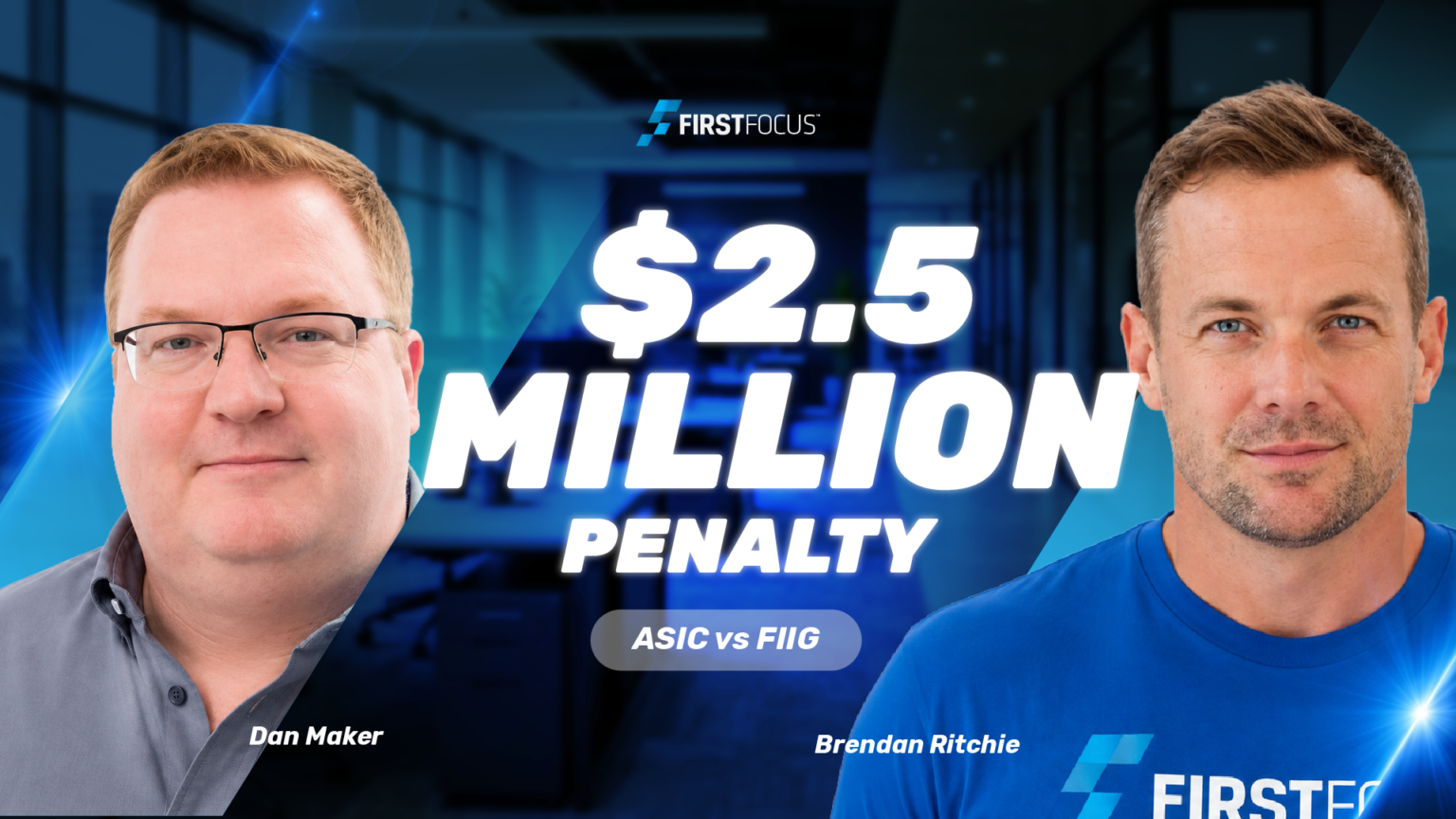
The recent ASIC action against FIIG Securities has become one of the clearest warnings yet for Australian organisations that regulators now expect businesses to take cybersecurity governance seriously, regardless of company size.
What makes this case particularly important is that FIIG was not a massive multinational enterprise with tens of thousands of employees. It was a mid-sized Australian financial services firm with roughly 80–100 staff.
That matters because many small and medium-sized businesses still assume cybercriminals primarily target large corporations.
The FIIG case proves otherwise.
In this article, we’ll unpack:
If your organisation handles sensitive customer data, financial information, or operates in a regulated industry, this case should be a wake-up call.
According to the podcast discussion, the FIIG incident began around May 2023 when an employee downloaded a malicious ZIP file containing malware.
This malware provided a malicious actor with access to FIIG’s internal network.
Once inside the environment, the attacker allegedly exfiltrated approximately 385GB of data, including highly sensitive customer information.
The compromised information reportedly included:
Around 18,000 clients were impacted.
The scale of the breach alone was significant, but the regulatory focus extended far beyond the initial malware infection.
ASIC’s findings suggested that FIIG lacked several important cybersecurity controls and did not respond effectively enough once suspicious activity was identified.
That distinction is critical.
This was not simply about being hacked.
It was about whether the organisation had taken reasonable steps to prevent, detect, and respond to cyber threats.
One of the most important takeaways from the discussion is that the penalty was not solely because a cyberattack occurred.
Cyber incidents happen to organisations of all sizes.
The issue was whether FIIG had implemented adequate safeguards and governance measures.
According to the podcast discussion, ASIC identified both procedural and technical deficiencies.
The findings suggested FIIG lacked sufficient cybersecurity controls to either:
The organisation reportedly did not engage with the Australian Cyber Security Centre (ACSC) until one to two weeks after the incident.
Delayed response times can significantly increase damage during a cyber incident.
Perhaps the most significant issue discussed was the apparent absence of a mature incident response plan.
An incident response plan helps organisations:
Without a documented and tested plan, organisations often respond chaotically during a crisis.
ASIC’s approach signals that cybersecurity is increasingly being treated as a governance issue rather than purely a technical issue.
Directors and executives are now expected to demonstrate reasonable oversight of cyber risk.
Many SMEs assume they are too small to attract cybercriminals.
That assumption is dangerous.
Cyber attackers frequently target smaller organisations because:
The FIIG case reinforces that regulators are also paying closer attention to SME cybersecurity practices.
Businesses can no longer rely on the excuse that they are “not enterprise-sized”.
If your company stores sensitive customer data, financial records, or personal information, you are expected to implement reasonable cybersecurity measures.
One of the strongest themes throughout the discussion is the evolution of cybersecurity governance in Australia.
Cybersecurity is increasingly viewed through the lens of:
This means cybersecurity decisions are no longer isolated within IT departments.
Executives, directors, and leadership teams are expected to understand:
The days of treating cybersecurity as a purely technical function are over.
An incident response plan is a documented process that outlines how an organisation detects, responds to, manages, and recovers from cybersecurity incidents.
Think of it as the cyber equivalent of a fire evacuation plan.
Without one, organisations are forced to improvise during a crisis.
Who is responsible for:
Clear triggers for when incidents should be escalated internally or externally.
Guidance for:
Processes for engaging:
Steps for:
Lessons learned processes to improve future resilience.
The FIIG discussion highlights the importance of layered cybersecurity controls.
No single tool prevents every cyberattack.
Strong cyber resilience comes from combining:
MFA remains one of the most effective ways to reduce account compromise risk.
Modern EDR solutions help detect suspicious behaviour before widespread damage occurs.
Employees remain a major attack vector.
Regular training helps staff identify:
Outdated systems are one of the most common attack paths.
Backups are only useful if recovery processes actually work.
Early detection significantly reduces breach impact.
Prepared organisations recover faster and minimise operational disruption.
The Australian Cyber Security Centre’s Essential Eight framework provides practical guidance for improving resilience.
A major underlying message from the podcast is that cybersecurity investment should no longer be viewed as discretionary spending.
Cybersecurity is now part of operational risk management.
The cost of underinvestment can include:
The FIIG penalty demonstrates that the consequences extend beyond the direct cost of a cyberattack.
Organisations may also face scrutiny regarding whether they took reasonable preventative measures.
Australian regulators are increasingly active in cybersecurity enforcement.
Businesses should expect continued focus on:
Industries handling sensitive information — particularly financial services, healthcare, professional services, and education — are under growing pressure to improve cyber maturity.
ASIC’s action against FIIG reflects a broader shift toward stronger regulatory expectations.
FIIG Securities suffered a cyber incident where malware enabled attackers to gain network access and allegedly exfiltrate approximately 385GB of sensitive customer and corporate data.
The issue was not only the breach itself. ASIC’s findings focused on alleged deficiencies in cybersecurity controls, governance, and incident response preparedness.
Australian businesses are increasingly expected to implement reasonable cybersecurity controls and incident response capabilities.
An incident response plan is a documented framework outlining how an organisation detects, manages, contains, and recovers from cybersecurity incidents.
No. The FIIG case is particularly significant because FIIG was a mid-sized organisation, reinforcing that SMEs are also expected to maintain strong cybersecurity practices.
The Essential Eight is a cybersecurity framework developed by the Australian Cyber Security Centre (ACSC) designed to help organisations reduce cyber risk.
The ASIC vs FIIG case sends several clear messages to Australian organisations.
It is no longer just an IT concern.
Regulators increasingly expect organisations to have documented and tested response procedures.
Company size does not eliminate cyber risk or regulatory expectations.
Executives and directors must understand and oversee cybersecurity risk.
Organisations must also demonstrate detection and response capabilities.
The ASIC vs FIIG cybersecurity case may become one of the defining moments in Australia’s evolving cyber governance landscape.
It reinforces a simple but important reality:
Cybersecurity preparedness is no longer optional.
Australian businesses of all sizes must now think beyond basic antivirus software and reactive IT support.
Organisations need:
The businesses that invest in cyber resilience today will be far better positioned to protect their customers, reputation, and operations tomorrow.
And increasingly, they may also reduce their exposure to regulatory scrutiny and legal consequences.

 IT Strategy
 IT Consulting
 Data Services
 IT Infrastructure Projects
 IT Procurement
 Business Continuity Planning
 Virtual CIO
 Cloud Migration Services
 Managed IT Services
 IT Support Services
 Managed Cloud Services
 Managed SharePoint Services
 Unified Communications
 Connectivity
 Offshore Staff Outsourcing (BPO)
 Managed Security Services
 ACSC Essential 8
 Cybersecurity Risk Assessment
 Cloud Backup and Disaster Recovery
 Cyber Security Connect and Protect Program
 Automation
 Power BI
 Careers
 Awards and Certifications
 Management Team
 Case Studies
 Sell Your IT Business
 Our Commitment to the Environment
 CSAT Charity Donations
 Media Kit
 Sydney