 IT Strategy
 IT Consulting
 Data Services
 IT Infrastructure Projects
 IT Procurement
 Business Continuity Planning
 Virtual CIO
 Cloud Migration Services
 Managed IT Services
 IT Support Services
 Managed Cloud Services
 Managed SharePoint Services
 Unified Communications
 Connectivity
 Offshore Staff Outsourcing (BPO)
 Managed Security Services
 ACSC Essential 8
 Cybersecurity Risk Assessment
 Cloud Backup and Disaster Recovery
 Cyber Security Connect and Protect Program
 Automation
 Power BI
 Careers
 Awards and Certifications
 Management Team
 Case Studies
 Sell Your IT Business
 Our Commitment to the Environment
 CSAT Charity Donations
 Media Kit
 Sydney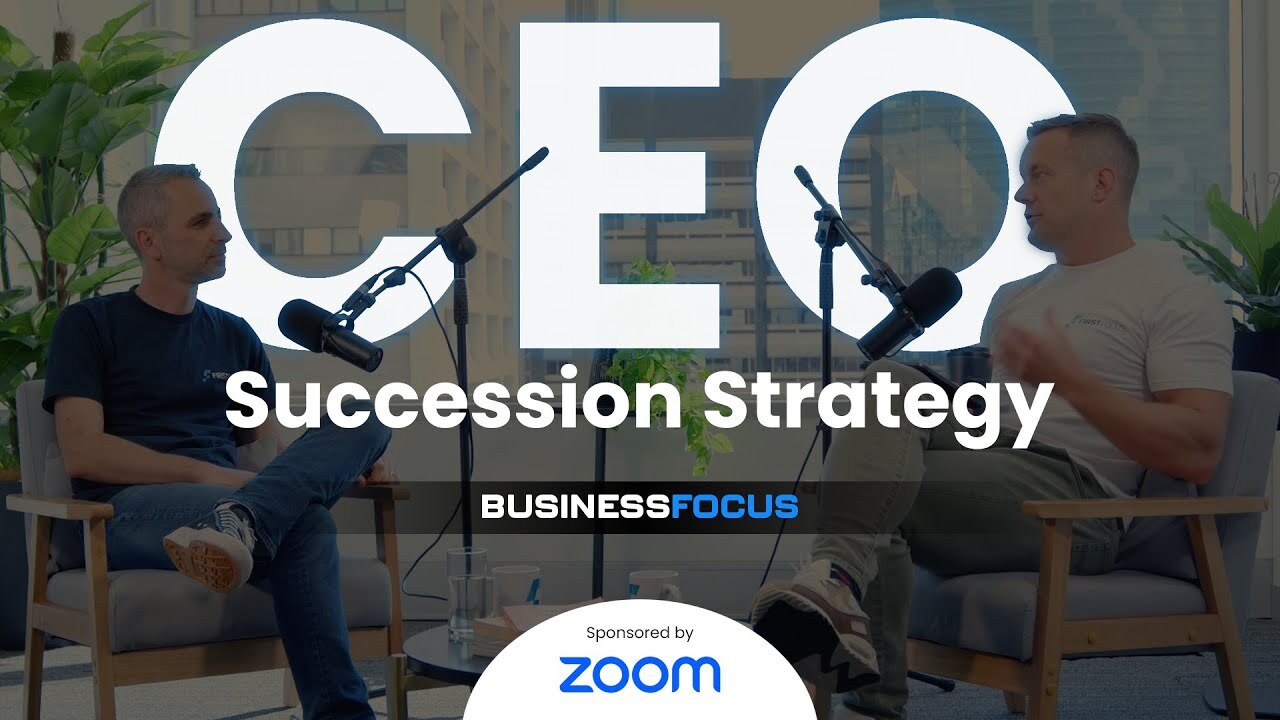
State Manager to CEO: Ross Sardi on Succession, Strategy and Scaling First Focus
Succession planning can make or break a business, particularly in the fast-paced world of technology and managed services. For Australian businesses navigating leadership change, First Focus provides a rare case study in how to do it right.
In this blog, we dive into the CEO transition at First Focus, as told in episode three of their Succession Planning podcast series. It features CEO of First Focus, Ross Sardi, reflecting on how he stepped into the leadership role following founder Peter Paddon’s decision to step back from the business. What unfolds is a story of strategic foresight, organic growth, and the power of shared values.
Whether you’re a founder thinking about stepping away, or a manager being groomed for more, this is essential read.
Episode Highlights & Key Takeaways
-
- What real succession planning looks like from the CEO’s seat
- Why values alignment trumps cloning the founder
- How to scale a business while staying people-first
- The power of forecasting and decision-making systems
- Lessons for owners stepping back (without letting go of vision)
- How forecasting and shared goals (like the BHAG) built confidence during the transition
What Succession Really Looks Like: It’s Not a Switch, It’s a Series
Ross didn’t land the CEO role overnight. His journey began in 2014 when he joined First Focus as a State Manager in WA. He was initially brought in for his technical expertise, specifically with ConnectWise, a critical software tool for MSPs.
From there, his role expanded organically:
- He quickly identified areas for operational improvement and efficiency
- His ConnectWise experience allowed for significant automation, saving time and increasing reporting accuracy
- He grew into a broader leadership role, eventually overseeing multiple functions beyond his original remit
By the time Peter Paddon went on a sabbatical in 2018, Ross was effectively running most of the business already. At that point, the handover wasn’t abrupt. It was the culmination of years of strategic delegation and trust-building.
Trust is Built Through Forecasting and Follow-Through
One of the turning points in the relationship between founder and future CEO was the ability to forecast with accuracy.
Ross’s implementation of reporting tools and dashboards gave Peter the confidence to step back. With clear visibility into performance metrics, Peter didn’t have to guess if things were on track, he could see it in real time.
Ross explains that forecasting wasn’t just a static budget:
- The forecast was dynamic, updated weekly
- It wasn’t just for the year, it rolled over a three-year horizon
- It was granular enough to support real-time decisions
For other Australian business owners, this is a powerful takeaway: reliable data gives leaders the courage to let go.
Strategy Through Purpose, Not Just Plans
In 2015, a year after Ross joined, First Focus held its first major offsite. It was here that the leadership team collaboratively defined the company’s values and long-term goal, what they called their BHAG (Big Hairy Audacious Goal).
This became a turning point in aligning the business:
- It wasn’t just about profit or growth targets
- The team committed to a shared purpose
- Every hire, promotion, and new idea was filtered through those values
From there, the strategic rhythm of the business changed. Rather than reactive, last-minute decisions, the team began planning in quarterly increments. The question shifted from “what now?” to “what needs to happen this quarter to move us toward our long-term goal?”
A New CEO Needs Room to Lead
When Peter began his sabbatical, Ross didn’t treat it as a temporary caretaker role. He knew that even if Peter returned, it wouldn’t be in the same way.
This mindset is crucial:
- He set his own goals within the established values
- He made decisions, even knowing they weren’t how Peter might have done it
- He didn’t wait to be told, he acted with the assumption that leadership was his responsibility now
This shift from executing someone else’s vision to crafting your own, while staying true to shared purpose, is what defines a successful succession.
Communication Doesn’t Have to Be Complicated—But It Must Be Honest
Interestingly, Ross and Peter never had a formal discussion about “how to communicate.” They just did.
Ross believes the reason their dynamic worked is because nothing was left unsaid. Disagreements were aired and resolved directly, without politics or posturing.
This doesn’t mean you need to agree on everything. It means you need a shared foundation, and the ability to speak honestly, especially when you disagree.
In Peter’s words: “Values are only values if you’re prepared to have them at a cost.” That sometimes means saying no to people who could do good work but aren’t aligned with the business’s direction.
Building Buy-In from the Wider Team
Ross admits there were concerns about how the wider leadership team would respond to change. Would people resist the shift? Would they leave?
Instead of forcing his authority, Ross focused on creating a situation where leadership change would feel inevitable and logical. He made sure that by the time any formal announcement was made, the team would see it as the natural next step.
That came down to:
- Gradually taking on more responsibility over time
- Building trust by demonstrating results
- Acting as if the title didn’t matter, only the outcomes did
The Role of a CEO Changes with Scale
When Ross began, the business had around 50 staff. Now, First Focus employs over 300 people and has completed 11 acquisitions.
So how has the CEO role evolved?
- Early on, Ross was deeply involved in project management and hands-on execution
- Today, his role is more external: engaging customers, representing the business publicly, and setting strategic direction
- His job is no longer to plan every task but to empower others to own priorities
Still, Ross believes a CEO should stay technically relevant. At First Focus, where they act as the outsourced IT department for their clients, it’s important that leadership is still deeply knowledgeable about the industry.
From Entrepreneur to Process-Driven Growth
Peter had the energy and vision to take First Focus from zero to 45 staff. That phase needed entrepreneurial energy, a willingness to try everything, and personal risk.
Ross brought structure, forecasting discipline, and scalable systems. He acknowledges that the next phase—possibly involving public listing or greater governance—may require yet another type of leadership.
This isn’t a failing. It’s just reality. Different stages of business growth often require different strengths.
Advice for Founders Looking to Exit
Ross offers some straight-talking advice to founders in Australia thinking about stepping away:
- Don’t look for a clone of yourself. You’re not replaceable—and you shouldn’t be.
- Instead, find someone with complementary strengths who can take the business to the next phase.
- Understand that they will do things differently. That’s not a risk, it’s a feature.
Letting go is difficult, especially when the business has been your life’s work. But without creating space for new leadership, you may end up becoming the bottleneck.
Why First Focus Works: Forecasting, People and Purpose
Looking back, Ross says the reason First Focus has grown sustainably comes down to three key ingredients:
- Rolling Forecasting: Weekly, live, three-year forecasts are used as decision-making tools—not just reports. They guide hiring, investment, and operational focus with precision.
- Exceptional People: The company hires people who are not only talented but also aligned with the business’s values. That alignment creates momentum, clarity and trust.
- Purpose and Values as Anchors: Every decision, every new system, and every acquisition must align with the company’s articulated values. It prevents fragmentation and keeps everyone moving in the same direction.
Want to Learn More About Managed Services Succession in Australia?
If you’re a business owner in Australia (especially in the MSP space) thinking about succession, there’s real value in hearing this story directly from those who lived it.
Ross Sardi, CEO of First Focus, has helped steer the company through founder transition, strategic growth, and multiple acquisitions. He’s open to chatting with other MSP owners who are thinking about their own next steps, whether that’s valuation, leadership handover, or just bouncing ideas.
You can reach out via LinkedIn or connect directly at ross@focus.com.au.
Final Thoughts
Succession planning isn’t just about naming a replacement. It’s about creating a structure where leadership change feels inevitable, not disruptive. At First Focus, that structure was built on a strong forecasting model, shared values, open communication, and the humility to let leadership evolve as the business matured.
For Australian business owners, especially in the tech sector, this case study offers not just inspiration but a roadmap.
If you haven’t yet listened to the earlier episodes of the First Focus succession series, especially Peter’s take from the founder’s perspective, make sure you catch up. You’ll walk away with insights that can shape your own leadership journey, whether you’re stepping up or stepping back.