AI tools create possibilities. Connected data, practical support and clear ownership help your people turn them into business results.
An employee finishes a customer meeting. The transcript is ready. But someone still has to write the follow-up email, update the CRM and assign the actions. Another employee knows a report could be faster, if only the right information could be brought together. A department head sees a repetitive process that ought to be automated, but has no clear route from idea to implementation.
These are ordinary business problems. AI makes more of them possible to solve. Buying licences, however, does little to answer the next question: who helps your people actually solve them?
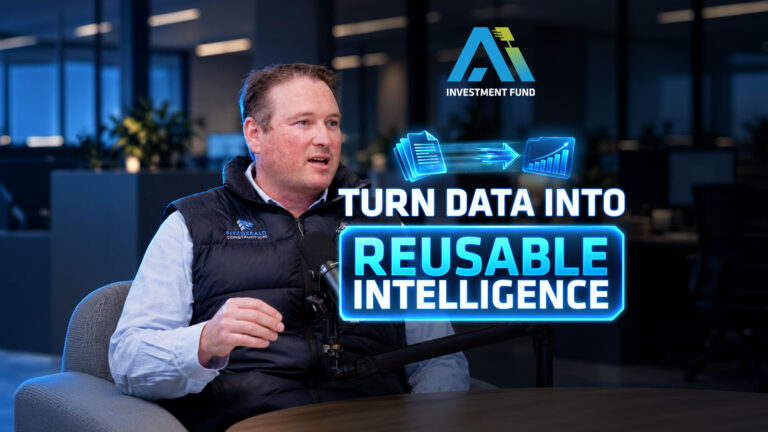
That question sits at the centre of the Fresh Brew discussion between Kyle Wewe and Brendan Ritchie, recorded in Tucson following the 2026 Integris Customer Summit. Their argument is practical: as AI changes what employees can do, the role of their managed IT provider has to change with it.
Personal productivity is often the starting point. Someone uses AI to improve an email, summarise a document or prepare for a meeting. The benefit is easy to see, and the employee can often get started without connecting much company information.
Then the questions become more useful, and more demanding. Can it find the answer in our internal knowledge? Explain what is happening across our business systems? Help build an application or automate a process?
Each step asks more of the business. The right information has to be available. Permissions have to be correct. Employees need to understand what they can safely do. Someone needs to decide which ideas deserve investment and help get them working.
As Brendan puts it in the webinar, “giving people some licenses isn’t an AI strategy.” The gap is between having access to a capable tool and having a reliable way to get value from it.

The people closest to a process usually understand its frustrations. They know which information is hard to find, which task gets repeated and where a customer waits unnecessarily. They may even have an idea for fixing it.
But an idea can quickly cross several boundaries. IT looks after the systems. A department owns the process. Someone else controls access to the data. The employee is left trying to join everything together while doing their normal job.
Without help, useful experiments stall. With too little oversight, they can create a different problem: manual exports, disconnected copies of business data and access that is difficult to manage. A clever workflow becomes another thing somebody has to maintain.
This is why AI cannot be treated as a separate add-on to the technology environment. It touches security, data, applications and the people using them. Those responsibilities need to work together.
CORE Intelligent Managed Services brings AI enablement into the managed services relationship, alongside the support and security a business already relies on. It connects that foundation with data governance, training, automation and strategic guidance.
The aim is to give employees a supported route from a business problem to a useful improvement. That means helping people use the right tools, making the relevant information available securely and keeping attention on whether the work produces a worthwhile result.
For a business leader, the change should be visible in everyday conversations. The support desk becomes a place to bring an idea. The account adviser helps decide what to pursue. Training continues as people encounter real work, rather than ending after the initial rollout.
In the age of AI, the help desk still needs to get the laptop working and restore access to an application. Its role now extends to helping employees work better with the technology in front of them.
That changes the request from “I’m locked out” to “How can I automate this?” An employee should have somewhere to ask how to turn internal knowledge into a useful assistant, simplify a repeated task or get more from the company’s approved AI tool.
In the webinar, Brendan describes a customer workflow that starts with a meeting transcript and produces a summarised email and follow-up tasks in the CRM. The value is in removing the manual steps between the meeting and the work that follows it.
Sometimes the right answer is to build the workflow. Sometimes it is to show an employee how to do it themselves. Both matter. Solving one problem helps today; giving someone the confidence to solve the next one can have a much wider effect.
The useful test for a business leader is simple: when someone in your team has an idea for working better, do they know who to call?
An operational review can explain how many tickets were closed, how quickly the team responded and which devices need replacing. Those measures remain useful. They do not tell a business leader what technology will help them achieve next.
The strategic account adviser’s conversation needs to begin with the business: where are we losing time, what is limiting growth and which customer experience needs to improve? From there, the team can identify an initiative, name its owner and define the result it is meant to produce.
That result needs to be specific enough to review. If the aim is faster turnaround, measure turnaround. If the aim is greater capacity, decide how the extra capacity will be used. Saving minutes in a process only becomes a commercial benefit when the business does something useful with the time.
The monthly conversation then becomes a decision: did the initiative deliver what we expected, should we improve it further, or is it time to move to the next priority?

An AI initiative can work technically and still disappoint commercially. If the intended users do not understand it, trust it or remember to use it, the expected benefit never reaches the business.
Adoption therefore needs to be part of the service, not an assumption made at launch. Employees need access to the approved tools, training that relates to their roles and practical help when they get stuck. New starters need that same support. Existing employees need it again as tools and workflows change.
This also makes adoption a management question. Who is using the new process? Where do they stop? What is confusing or inconvenient? Those answers can be more valuable than another demonstration of what the technology could do.

As employees move beyond general questions, they need AI to work with business information. Copying a report into a chatbot can help with one task, but it leaves questions about freshness, security and the information missing from that report.
Connecting each employee to each system separately creates another burden. Someone has to maintain access, resolve inconsistent data and ensure that people can see what they need without seeing what they should not.

CORE Intelligence provides a shared, managed data foundation for that work. Relevant information is brought into the platform, cleansed and linked, then made available with governance and permissions. New AI uses can build on that foundation instead of repeating the same data preparation and access work for each employee and tool.
That foundation can support chat, dashboards, bespoke applications and automation. Each use still needs a clear purpose, appropriate access and an agreed implementation scope. Monitoring, maintenance and support keep the underlying connections and data views useful as the business changes.
Data readiness is an ongoing responsibility. Versions change, systems are added and people move roles. The business needs a way to maintain that foundation as its use of AI develops.
Australasian Retail Projects fits out retail spaces. In the webinar, Brendan describes a key employee whose knowledge was central to the way work moved through the business. The company had useful spreadsheets and planning information, but knowing how to apply it still depended heavily on that person.
After the business adopted CORE, she contacted the help desk for help using Claude. The team showed her a workflow, and she went on to automate more of her own work. Brendan describes the result as making her knowledge available beyond her individual involvement, reducing dependence on one person.
The lesson is about enablement. A knowledgeable employee already understood the business problem. Practical support helped her turn that understanding into a different way of working.
Brendan also describes Shamrock, where slow design work and inefficient supplier communication were making it difficult to get products to market quickly enough. The business used AI and existing information to rethink those processes, reducing the need to rely on whoever had previously dealt with a particular supplier.
According to Brendan’s account in the webinar, Shamrock’s chief operating officer subsequently told him that a previously loss-making customer relationship had become profitable.
What makes the example useful is the connection between the work and the outcome: identify the commercial constraint, improve the process that creates it, and check whether the business result changes.
A sensible starting point is one recurring problem your people already understand. Identify who owns it, what a better result would look like and which information is needed. Check the security and data foundations, then give the team the support to put the improvement into practice.
From there, review use and results together. A workflow that nobody adopts needs attention. A successful one may be worth extending. The next initiative should follow the evidence, rather than the excitement around a particular tool.
That is the broader change behind CORE. In the age of AI, the help desk has a new job, the advisor has a new conversation and the business has a clearer way to turn ideas into useful work.
Talk to your advisor about the process your team would most like to improve, and what it would take to measure a meaningful result.

 IT Strategy
 IT Consulting
 Data Services
 IT Infrastructure Projects
 IT Procurement
 Business Continuity Planning
 Virtual CIO
 Cloud Migration Services
 Managed IT Services
 IT Support Services
 Managed Cloud Services
 Managed SharePoint Services
 Unified Communications
 Connectivity
 Offshore Staff Outsourcing (BPO)
 Managed Security Services
 ACSC Essential 8
 Cybersecurity Risk Assessment
 Cloud Backup and Disaster Recovery
 Cyber Security Connect and Protect Program

 Automation
 Power BI
 Careers
 Awards and Certifications
 Management Team
 Case Studies
 Sell Your IT Business
 Our Commitment to the Environment
 CSAT Charity Donations
 Media Kit
 Sydney