 IT Consulting
 Data Services
 IT Infrastructure Projects
 IT Procurement
 Business Continuity Planning
 Cloud Migration Services
 Managed IT Services
 IT Support Services
 Managed Cloud Services
 Managed SharePoint Services
 End User Computing
 Unified Communications
 Connectivity
 Virtual CIO
 Offshore Staff Outsourcing (BPO)
 Managed Security Services
 ACSC Essential 8
 Cybersecurity Risk Assessment
 Cloud Backup and Disaster Recovery
 Cyber Security Connect and Protect Program
 Automation
 IT Strategy
 Microsoft 365 Consulting
 Power BI
 Careers
 Awards and Certifications
 Management Team
 Case Studies
 Sell Your IT Business
 Our Commitment to the Environment
 CSAT Charity Donations
 Media Kit
 Sydney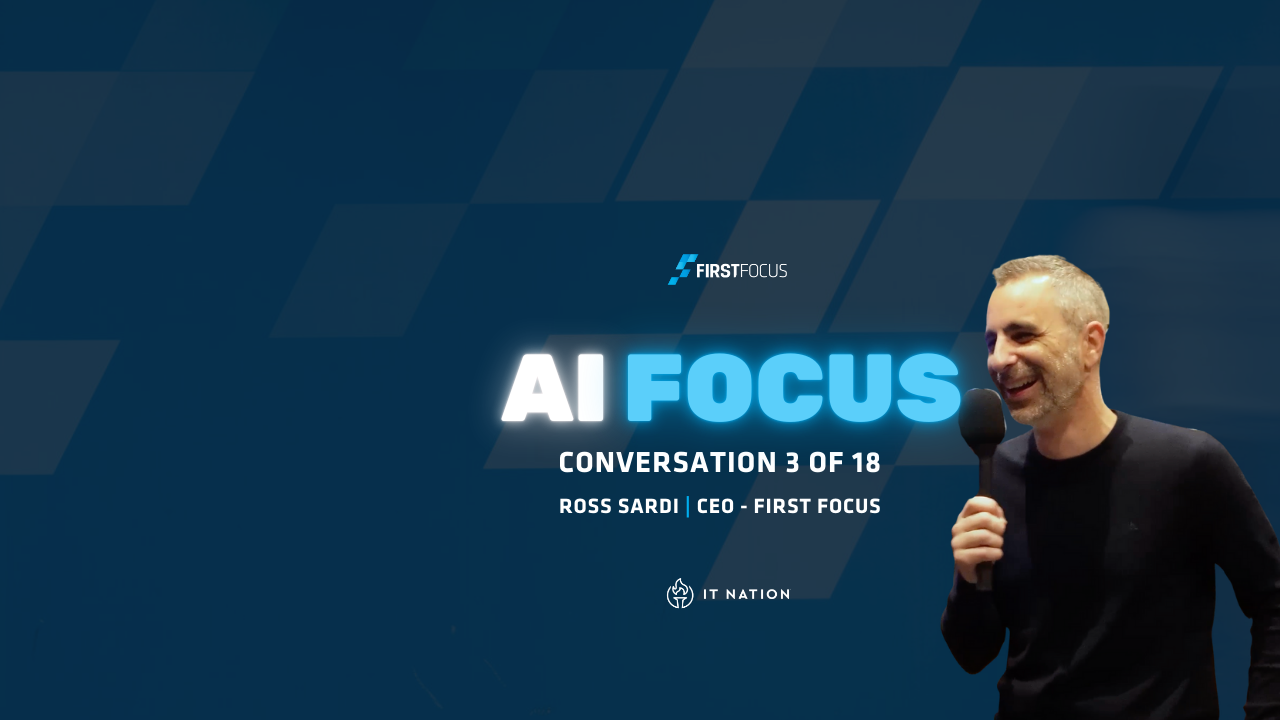
Favourite AI Tools Right Now: Vibe Coding, Due Diligence GPT, and Smarter Prompts for Better Decisions
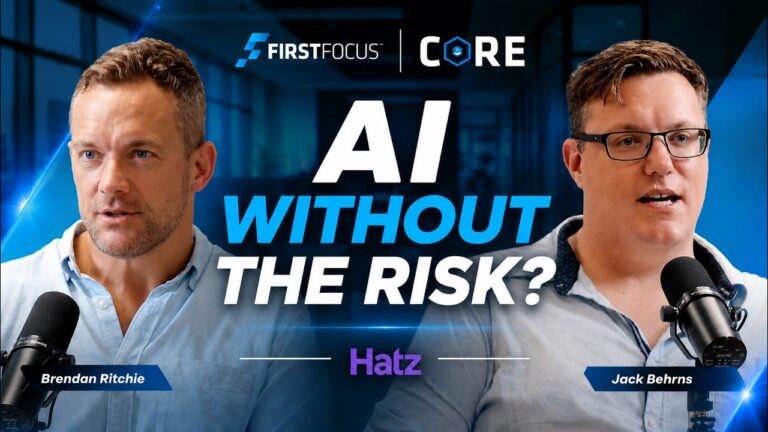
In this AI Focus episode, recorded at the IT Nation Connect Global Conference in Orlando, First Focus CEO Brendan Ritchie sits down with an industry peer to explore how AI tools are reshaping the way leaders build software, manage acquisitions, and make decisions. From building a $75,000 app in a single weekend through vibe coding to using GPT for due diligence in mergers and acquisitions, the conversation is full of practical ideas Australian MSPs and businesses can put into action right now.
Key takeaways
- Low code and vibe coding tools like Lovable can turn a six figure development idea into a working app in days instead of months.
- Great user experience is critical for AI powered tools because clunky interfaces remain one of the biggest barriers to adoption.
- Building a due diligence GPT for M&A work can uncover issues buried deep in contracts and data rooms, improving decision quality.
- Good outputs still depend on good data, so structuring information properly remains essential for finance and operations teams.
- Effective prompting starts with curiosity, including asking AI what it needs from you to complete a task well.
- “Tell me I’m wrong” style prompts, including virtual CEO GPTs, help leaders stress test decisions before taking them to stakeholders.
- We are still uncovering features in AI tools we already use, meaning most organisations are underutilising current capability.
- The real risk is not AI itself, but generic “work slop” created by copy and paste prompting without critical thinking.
- Australian organisations can gain a competitive edge by using AI to augment expertise, not replace it.
Watch the episode
Inside AI Focus: Real world tools, not theory
AI Focus is a practical conversation series. Brendan speaks with leaders who are actively using AI rather than theorising about it. The discussion covers how vibe coding enables rapid app creation, how a due diligence GPT streamlines acquisitions, and how better prompting improves decision making. For Australian businesses still working out how to adopt AI, the episode offers a straightforward playbook grounded in experience.
Vibe coding and Lovable: From six figure budget to weekend build
Lovable, a vibe coding platform, is the standout tool mentioned in the episode. It enables fast creation of intuitive apps that look polished and are easy to use. This matters because clunky software remains one of the biggest barriers to successful AI and technology adoption.
A major story in the episode is a technology roadmap and budgeting tool the team originally scoped as a $75,000 internal project. Instead of commissioning a lengthy development process, the guest decided to test the idea using Lovable. By Thursday morning he had a rough prototype. After a solid weekend of work, the app was usable by Monday. This turned a multi-month build into an MVP delivered in days.
Since then, client feedback has been strong and new features can be added in minutes. For Australian MSPs and mid sized organisations, that type of speed can significantly accelerate innovation cycles.
What vibe coding means for business leaders
Vibe coding represents a major shift in how software is created. Instead of writing every line of code manually, a smart assistant helps structure and generate components while the builder provides direction. Traditional developers may be sceptical, but for internal tools and prototypes it is often more than enough.
This unlocks new opportunities for leaders who understand their business processes deeply:
- Building internal dashboards for service levels or financial performance.
- Prototyping new service models before investing in commercial development.
- Automating niche workflows that would never justify a full software project.
The real power comes from pairing business insight with lightweight development capability.
AI for M&A: Building a due diligence GPT
The episode then moves into acquisitions. Due diligence is a resource-heavy process involving customer contracts, supplier agreements, HR documentation, and financial records. To streamline this, the guest created a dedicated due diligence GPT. By feeding in the data room content, he can query the information directly and uncover risks that might otherwise be missed.
One example shared in the episode is the GPT identifying an issue buried on page 37 of a contract. Instead of relying purely on manual review, the model highlights clauses, exceptions, and unusual terms quickly. This gives legal and commercial teams a stronger starting point.
Good data still matters
Even with AI, clean inputs matter. Due diligence still requires well organised documents and consistent data. The good news is that models are more tolerant of mixed file types than traditional software. The bigger challenge is resisting the urge to ask vague questions and expect perfect answers. As the guest explains, the best results come from curiosity and iterative questioning.
Prompting smarter: “What do you need from me?”
One of the strongest prompting techniques discussed is the habit of beginning a task by asking the AI what it needs to know. Instead of specifying everything up front, the leader describes the outcome and asks the model to request any missing detail. This turns prompting into a structured conversation and consistently produces clearer, more relevant outputs.
AI as a challenger: “Tell me I’m wrong” and Ross GPT
The idea of using AI as a challenger is another valuable insight. Many senior leaders do not get regular direct pushback on ideas. To counter that, the guest created a custom GPT designed to assume he is wrong and provide critical feedback. Brendan followed suit by creating “Ross GPT”, a virtual CEO whose first job is to point out flaws in an idea before refining it.
This works particularly well for strategic planning, board papers, service design, and scenario testing. It strengthens thinking before ideas reach a wider team.
We are still only scratching the surface
The discussion also highlights how early we still are in the current AI wave. Even experienced technologists often discover new features buried inside tools they already use. Examples raised include Grok capabilities in Tesla vehicles and advanced audio or camera features in mobile apps that can describe images in real time.
For Australian businesses, this means there is significant untapped value in existing software licences. Structured exploration sessions and internal sharing can help staff understand what is already available to them.
The risk of “work slop” and lazy AI use
Not all AI adoption is good adoption. The episode calls out the rise of generic content produced by people prompting base models without thought. This “work slop” appears in marketing, reporting, and even schools. It is now easier than ever to generate something that looks like work, but it is more important than ever to apply judgment.
For organisations, the risks include:
- A generic, undifferentiated brand voice.
- Poor decisions based on shallow analysis.
Leaders must set expectations that AI output is a draft, not a final product.
Practical actions for Australian leaders
- Choose a vibe coding tool and build a small internal app.
- Experiment with a due diligence or contract review GPT.
- Use the “what do you need from me” prompt pattern.
- Create a challenger GPT for your leadership role.
- Run internal discovery sessions to surface hidden software features.
- Set clear standards for review and refinement of AI generated work.
These steps do not require large budgets or complex strategies. They are incremental improvements that compound into real operational benefits.
Bringing it together
While the episode ends with humour and a few compliments, the message is clear. AI is here, it is practical, and it is already reshaping how organisations operate. By approaching it with curiosity rather than complacency, Australian leaders can unlock meaningful value while avoiding the pitfalls of generic AI use. Whether through vibe coding, due diligence automation, or smarter prompting, the tools are ready for those willing to experiment.