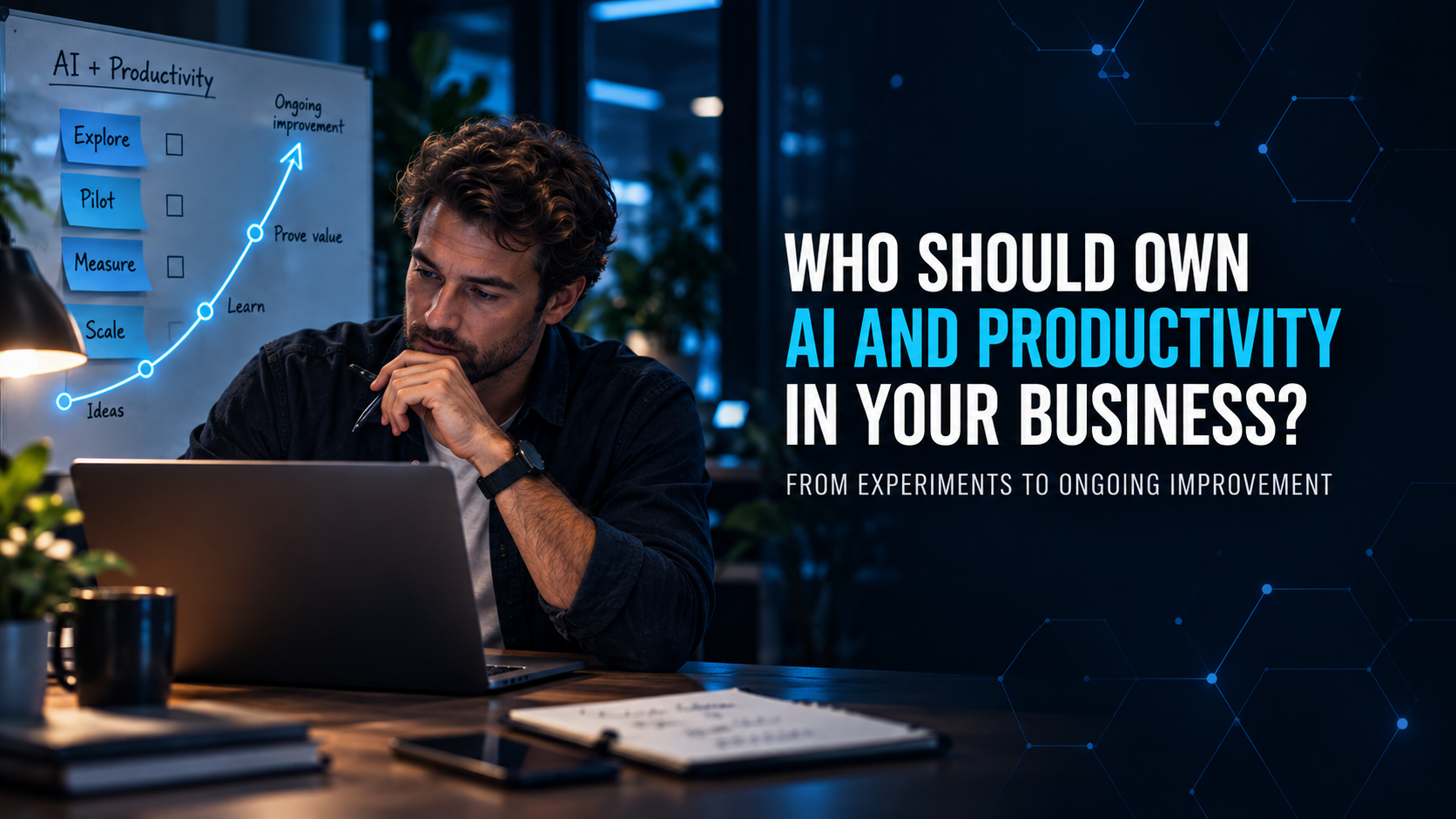
ChatGPT Business is easy to buy. Getting people to use it safely, consistently and in ways that create measurable value takes more work. A good implementation partner should help you choose useful use cases, protect company information, connect the right data, train your people and keep improving adoption after launch.
The Short Version
Start with business problems and worthwhile use cases, rather than product features.
Security, data governance and access controls should be considered before information is connected.
The work continues after launch. Training, adoption, measurement and ongoing support all matter.
OpenAI Services Partner
First Focus is an OpenAI Services Partner for Australia and New Zealand, helping organisations introduce ChatGPT Business with the strategy, governance, security, adoption and ongoing support needed around the platform.
Watch
Beyond the Licence
ChatGPT Business gives organisations a managed workspace for using ChatGPT. But the platform does not decide which business processes should use AI, what information employees can enter or how success should be measured.
Without a plan, employees tend to develop their own ways of working. Some use AI heavily. Others barely touch it. Different teams may reach different conclusions about what is acceptable to share, when outputs should be checked and which tasks AI is suitable for.
That is where an implementation partner should add value. The job is to help turn access to ChatGPT into useful, governed business adoption.
“Buying an AI licence on its own does not create value. What matters is adoption.”
Ross Sardi, Managing Director (ANZ), First Focus · OpenAI Services Partner
01 · Business Fit
A useful partner should spend more time learning how your organisation works than showing you everything ChatGPT can do.
Discovery should involve the people who understand the work, which may include operations, finance, IT, cybersecurity and employees who will actually use the platform.
Look for work that takes too long, depends heavily on information or involves repeated manual steps. That might include preparing first drafts of tenders, searching policies, analysing lengthy documents, producing reports or supporting employee onboarding.
The important question is simple:
“What are you trying to solve with it?”
Once opportunities have been identified, the partner should help compare them against expected value, effort, risk and data sensitivity.
Ask the Partner
How will you identify and prioritise our best ChatGPT use cases?
02 · Security and Governance
ChatGPT Business provides central administration and security controls, but your organisation still needs to decide how those controls should be used.
Your implementation partner should be able to work through identity and access, workspace administration, acceptable-use rules, connected applications, sensitive information and situations where human review is required.
They should also help determine whether ChatGPT Business is suitable for your organisation, or whether your security, administration or compliance requirements call for a different OpenAI plan.
For Australian and New Zealand organisations, the provider should also be comfortable working with privacy, cybersecurity, legal and risk advisers where needed.
Ask the Partner
How will you protect our information and manage AI risk?
03 · Data and Integration
ChatGPT becomes more useful when it can work with relevant company information. That also means data quality, ownership and permissions matter.
Before connecting systems such as Microsoft 365, SharePoint, Google Workspace, Slack or other business platforms, your partner should understand which information is authoritative, who owns it and who should be allowed to access it.
AI should not become a shortcut around permissions that already exist.
A partner should also be able to explain when a standard connector is enough, when a workflow needs additional work and when another AI platform may suit the problem better.
That matters because ChatGPT does not have to replace every other AI tool in the business. ChatGPT and Microsoft Copilot, for example, may both have useful roles depending on the work being done and the systems employees already use.
Ask the Partner
What systems can you connect ChatGPT to, and how will existing permissions be preserved?
Watch the Conversation
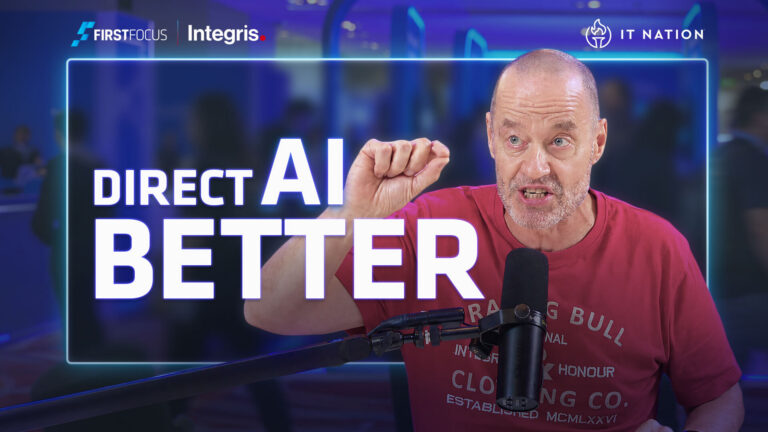
First Focus has rolled ChatGPT out across its own workforce. In this conversation, the team discusses adoption, AI platforms and what businesses should consider when introducing ChatGPT more widely.
04 · Adoption and Training
Accounts can be created quickly. Changing how people work takes longer.
Employees need to know where ChatGPT can help, where its limitations sit, what information they can use and when they need to check its work.
Training is also more useful when it relates to someone’s actual role. A finance team, marketing team and operations team are unlikely to benefit from exactly the same examples.
First Focus’s own rollout found that education, structured adoption and continued iteration mattered after employees were given access. Usage itself can also act as an early signal. If licences are available but particular teams are not using them, it is worth understanding why.
A partner should be able to support role-based training, internal champions and follow-up after launch.
Ask the Partner
How will you train our people and improve adoption after launch?
05 · Ongoing Value
ChatGPT will keep changing. So will your business processes, employees and priorities.
A one-off launch therefore tells you very little about the long-term value of a partner.
Ask what happens three, six and twelve months later. Who reviews usage? Who identifies new use cases? Who updates governance? Who helps when integrations change? Who checks whether the investment is producing a useful result?
Measures might include time saved, fewer manual steps, reduced rework, faster responses, employee adoption or less use of unapproved AI accounts.
Not every benefit needs to be reduced immediately to a dollar amount, but there should be an agreed way to tell whether the implementation is improving something the business cares about.
Ask the Partner
How will you measure value, and what support remains available after launch?
Partner Checklist
When comparing providers, look for capability across these five areas.

ANZ ChatGPT Business Partner Checklist
Before You Choose
Ask for specifics. A useful answer should explain the process, who is responsible, what gets delivered and how progress will be measured.
Where First Focus Fits
Choosing the right ChatGPT Business partner is partly about the initial deployment. The bigger question is what happens around it and what happens next.
CORE + ChatGPT Business is First Focus’s managed approach to ChatGPT Business adoption. As an OpenAI Services Partner for Australia and New Zealand, First Focus helps businesses put the strategy, security, governance, data and training around the platform so it can become part of everyday work.
ChatGPT Business licences are purchased directly from OpenAI. CORE provides the managed service around the platform, covering the areas that often determine whether adoption produces a useful business result.
Rollout is based on your actual workflows and business needs rather than a generic set of AI examples.
Governance policies, access controls and security requirements are considered as part of the adoption process.
First Focus can help organise and govern the information employees rely on, including SharePoint environments and access permissions.
Training is built around the work your people actually perform, helping teams apply ChatGPT to relevant tasks rather than learning prompts in isolation.
Your Technical Account Manager works with you regularly to identify and prioritise the next AI or automation opportunity.
AI sits alongside broader IT support, cybersecurity, SharePoint, data and account management rather than becoming another isolated technology project.
That ongoing model is important. A useful ChatGPT Business implementation should not end when accounts are created. As your people use the platform, new questions will emerge about workflows, information, training and where AI can help next.
CORE gives the business a regular way to review those questions and turn the useful ones into action.
CORE + ChatGPT Business
If you are considering ChatGPT Business, see how CORE brings deployment, governance, security, data, training and ongoing improvement together under one managed service.
Common Questions
A ChatGPT Business implementation partner should help identify useful business applications, prepare security and governance controls, connect approved information sources, train employees and measure adoption after launch.
Look for capability across business discovery, security, data governance, integration, employee training and ongoing support. The provider should also understand the Australian and New Zealand business environment and be able to support users locally.
No. The licence provides access to the platform, but organisations still need to decide which tasks AI should support, what information employees can use, how outputs should be reviewed and how adoption and business value will be measured.
ChatGPT can work with supported business information sources and connected applications. Organisations should review data quality, ownership and permissions before connecting information, and access should continue to respect existing controls.
Measures should relate to the work being improved. These could include employee usage, time saved, manual steps removed, reduced rework, faster responses or reduced use of unapproved AI tools.
Yes. Different AI platforms can suit different types of work. The decision should consider the business problem, the information involved and the technology employees already use rather than assuming one AI platform must handle every use case.

 IT Strategy
 IT Consulting
 Data Services
 IT Infrastructure Projects
 IT Procurement
 Business Continuity Planning
 Virtual CIO
 Cloud Migration Services
 Managed IT Services
 IT Support Services
 Managed Cloud Services
 Managed SharePoint Services
 Unified Communications
 Connectivity
 Offshore Staff Outsourcing (BPO)
 Managed Security Services
 ACSC Essential 8
 Cybersecurity Risk Assessment
 Cloud Backup and Disaster Recovery
 Cyber Security Connect and Protect Program
 Automation
 Power BI
 Careers
 Awards and Certifications
 Management Team
 Case Studies
 Sell Your IT Business
 Our Commitment to the Environment
 CSAT Charity Donations
 Media Kit
 Sydney