Follow us on our channels:


The managed services industry is at a turning point. What once revolved around keeping servers running and laptops functional has shifted dramatically. Australian businesses are now operating in a world defined by AI platforms, automation, cloud applications, distributed data, and heightened security and privacy requirements.
This change raises an important question. What does a good managed service actually look like today?
The answer is no longer found in a server cupboard or a purely reactive help desk model. Instead, it starts with a fresh perspective on what modern organisations truly need to operate, grow, and compete.
This is the thinking behind a new approach to intelligent managed services, designed for businesses that are investing in AI now or preparing to go all in.
To understand why managed services need to evolve, it helps to look at where the industry began.
Managed services originally emerged when businesses ran their own infrastructure on site. Servers sat in cupboards or spare rooms. Someone needed to check them regularly, make sure nothing was flashing red, and step in when something broke.
Over time, cloud computing and remote management tools changed how this work was delivered. Security became more complex. Systems became more distributed. But the core idea stayed the same.
Managed services were still fundamentally about infrastructure.
The challenge today is that AI, automation, and data governance are not just add-ons. They are central to how businesses operate.
Instead of simply bolting these capabilities onto an infrastructure-first model, a smarter approach is to start from scratch and ask a different question.
What does a business actually need from its technology partner today?
When viewed through this lens, a new set of priorities emerges.
Only after these needs are addressed does traditional infrastructure management even come into the picture. This flips the old model on its head. Infrastructure becomes one component, not the foundation.
Large enterprises often have in-house teams dedicated to AI, data governance, and cyber security. Most mid-sized businesses do not.
Organisations with around 50 to 200 users still face the same regulatory obligations, security threats, and technology opportunities as much larger companies. They simply lack the internal expertise to manage them alone.
Privacy and security obligations mean data governance is no longer optional. Cyber security risks apply universally. AI and automation now offer productivity gains across almost every industry.
These are no longer nice-to-have capabilities. They are non-negotiables.
One of the biggest shifts in recent years is where business data actually lives.
It is no longer stored on a shared drive attached to a server in the office. Today, data is spread across many platforms and applications, often without a complete inventory.
This creates challenges around compliance, security, and productivity. It also makes it difficult to use AI effectively.
To get value from AI, data needs to be connected, governed, and accessible in the right way. That requires application integration, bringing data together, and then making best use of AI over the top of it.
Delivering this kind of service demands a different skill set from traditional managed services. It is less about fixing hardware and more about designing intelligent systems that work together.
The concept of the help desk is evolving.
End-user support still matters. People still need help when something does not work. But the nature of those requests is changing.
Instead of constant calls about broken laptops, the future looks more like a technology enablement team that helps businesses improve how work gets done.
In practice, the questions shift towards topics like these.
In parallel, self-service continues to expand. The direction of travel is clear. Reduce the need for people to call at all, so they can chat and have common tasks happen automatically. Over time, that reduces effort and improves the overall experience for staff.
One of the biggest mistakes organisations make with new technology is assuming that deployment equals adoption.
It does not.
Tools need to be rolled out properly. People need training. Momentum and excitement matter. Without these elements, even the best technology will fail to deliver a return.
This is especially true with AI and automation.
When users understand what is possible and feel supported, something interesting happens. Non-technical staff begin to solve problems themselves.
With the right training, tools, and momentum, people who never considered themselves technical can start building useful automations and improving repetitive processes. That moves innovation closer to the work and unlocks value faster.
Many businesses are investing heavily in AI platforms and large language models. But investment alone does not guarantee results.
The key question becomes whether the organisation is truly AI-first or automation-first in how it operates.
Without a clear plan, it is difficult to generate a return on that investment. The technology becomes underutilised or disconnected from real business needs.
A more effective approach is to keep asking a simple question as part of everyday work.
How else could we do this?
That mindset drives continuous improvement and helps keep AI embedded in real workflows rather than sitting on the sidelines.
While every business is different, AI use cases tend to fall into a small number of consistent categories.
Rather than trying to do everything at once, a practical approach is to focus on one area each quarter. Pick one, align the right people, and do meaningful work that produces outcomes you can measure.
Working across multiple industries provides a real advantage when delivering intelligent managed services.
Financial services, science, manufacturing, engineering, retail, and other sectors all face similar challenges, even if their workflows differ. Patterns emerge, and successful solutions in one organisation can often be adapted for another.
This reduces the need to create something completely bespoke every time. Instead, reusable building blocks and architecture can speed up the delivery of solutions that still feel tailored to the customer.
Traditional managed services have often been defensive in nature. The goal was risk mitigation and avoiding downtime, so staff stayed productive.
The intelligent managed services model described in the transcript is structured differently. At its core, it is a fixed monthly rate that includes a significant amount of consulting and smaller project-style work up to a defined limit.
The focus areas include:
When work exceeds the included threshold, it becomes a larger project delivered by the wider team. At the top tier, a flexible bank of consulting time is added, scaled to business size. This supports ongoing monthly priorities, whether that month is focused on security, AI, or SharePoint.
The underlying goal is straightforward. The ROI from the work completed using the plan should more than pay for the plan itself, on top of the security and governance outcomes included.
Perhaps the most important shift is how technology spend is viewed.
Historically, managed services were a cost centre. They reduced risk and prevented downtime, but they did not actively create value.
This model aims to change that. If you save even one hour per employee per month, it does not take much for the business case to stack up. From there, the flow-on effects can include serving more customers and slowing the hiring rate, which is where meaningful savings show up on the P&L.
It also changes the conversation for internal IT leaders. Instead of being measured only on whether the lights were on, leaders can point to productivity, risk mitigation, and technology adoption across departments. The KPIs become more interesting, and more connected to business outcomes.
There is one thing all businesses have in common. They are looking for ways to either generate more revenue or reduce costs, and often both.
AI, automation, and intelligent managed services provide a practical pathway to achieve that, not through hype or one-off projects, but through consistent, structured improvement supported by the right expertise.
Managed services are no longer just about managing infrastructure. They are about enabling better outcomes, month after month.
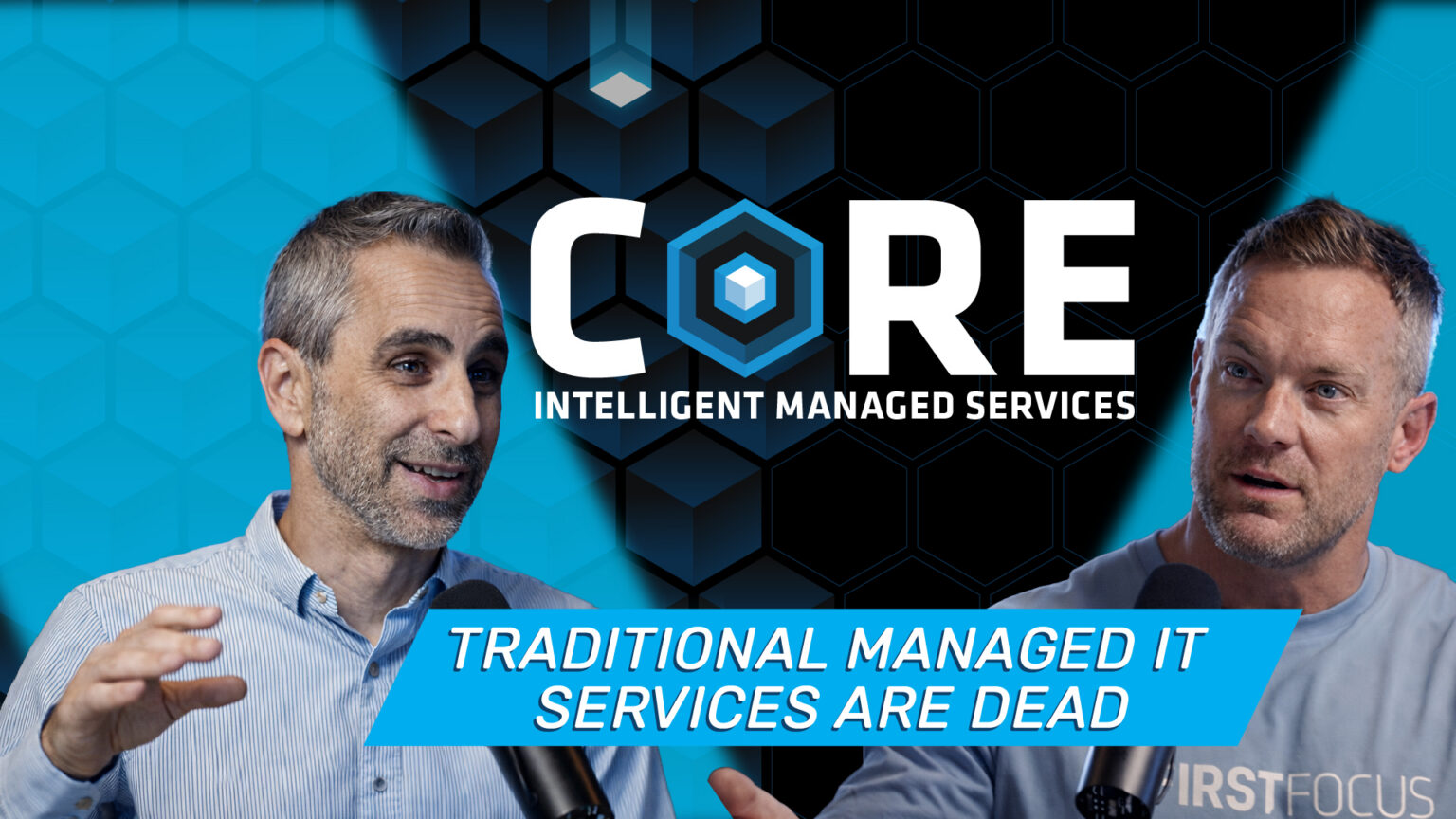
This thinking is formalised in the new CORE managed IT service model. CORE is designed as an intelligent managed service that puts AI, automation, data governance, and security at the centre, rather than treating them as optional extras. It brings together a fixed monthly approach with built-in consulting, enablement, and continuous improvement, so businesses can keep progressing every month instead of relying on one-off initiatives. For organisations that are serious about being AI-first or automation-first, CORE provides a structured way to focus on the work that drives productivity gains, supports stronger security outcomes, and targets measurable return on investment.


 IT Consulting
 Data Services
 IT Infrastructure Projects
 IT Procurement
 Business Continuity Planning
 Cloud Migration Services
 Managed IT Services
 IT Support Services
 Managed Cloud Services
 Managed SharePoint Services
 End User Computing
 Unified Communications
 Connectivity
 Virtual CIO
 Offshore Staff Outsourcing (BPO)
 Managed Security Services
 ACSC Essential 8
 Cybersecurity Risk Assessment
 Cloud Backup and Disaster Recovery
 Cyber Security Connect and Protect Program
 Automation
 IT Strategy
 Microsoft 365 Consulting
 Power BI
 Careers
 Awards and Certifications
 Management Team
 Case Studies
 Sell Your IT Business
 Our Commitment to the Environment
 CSAT Charity Donations
 Media Kit
 Sydney